
Over the past 50 years, countless people have contributed to WWF-New Zealand’s mahi to protect Aotearoa’s native species and habitats. Read more about just some of the remarkable people whose leadership, passion, and vision helped shape our legacy.
1975
14 years after WWF was established globally to conserve the world’s wildlife, WWF-New Zealand is founded as a charitable trust by a prominent group of business, conservation and community leaders.
1976
We launch a major campaign to save three iconic native species: the kākāpō, takahē, and Chatham Island robin. With black robin numbers down to just five individuals, their recovery becomes an internationally-celebrated conservation success. Today, around 300 birds remain.
1980
WWF plays a key role in creating the landmark World Conservation Strategy, the first plan to introduce the concept of ‘sustainable development’. It inspires the way countries around the world, including New Zealand, approach conservation.
1982
WWF’s global advocacy - alongside Greenpeace and others - leads to the international moratorium on commercial whaling. WWF-New Zealand continues this fight, gathering over 100,000 signatures in a 1993 petition opposing whaling.
1982
WWF provides seed funding to establish Tiritiri Matangi Island Sanctuary, transforming a farm into a predator-free haven for native wildlife. Nearly $150,000 (around $650,000 today) is raised to bring the vision to life
1985
We fund pioneering research into New Zealand sea lions around the Auckland Islands. A decade later, the Auckland Islands Marine Mammal Sanctuary is established, providing protection for sea lions and southern right whales.
1988
WWF-New Zealand purchases a section of Dunedin coastline to protect hoiho / yellow-eyed penguins - our largest fully-funded New Zealand project to date. We remain deeply involved in penguin conservation and advocacy to this day.
1991
WWF-New Zealand moves into The Treehouse in the Wellington Botanic Garden, complete with a classroom dedicated to educating tamariki about the importance of nature. We provide environmental education programmes to thousands of tamariki and distribute environmental resources around the motu.
1992
WWF plays a leading role in the creation of the United Nations Convention on Biological Diversity, signed by 163 countries including Aotearoa New Zealand.
1997
WWF has a pivotal role in securing the Kyoto Protocol, the first international agreement to limit carbon emissions that leads to the groundbreaking Paris climate agreement in 2015.
1998
WWF’s first Living Planet Report is published, providing a world-leading analysis of biodiversity health and humanity’s pressure on nature. Updated every two years, the report has provided a measure for changes in biodiversity that has helped inform the global debate on the nature loss crisis.
1999
In partnership with the Tindall Foundation, we establish the Habitat Protection Fund, followed by the Environmental Education Fund in 2003 to support community-based conservation. These evolve into today’s Community Conservation Fund, and together the funds have supported hundreds of projects nationwide.
2002
WWF-New Zealand helps found the Southern Seabirds Trust, an alliance that works with commercial and recreational fishers, associated agencies and industry to reduce harm to New Zealand seabirds from fishing.
2007
Following years of sustained advocacy, the Government releases the first Hector’s and Māui Dolphin Threat Management Plan - a step toward protecting these endangered taonga species. We continue to push for stronger protections, including addressing fishing threats and expanding marine protected areas.
2008
Earth Hour launches in New Zealand. Kiwis across the country switch off their lights in a symbolic call for climate action - joining what becomes one of the world’s largest grassroots environmental movements.
2011
We support wildlife rescue efforts following the MV Rena oil spill off the coast of Tauranga. Nearly 400 little blue penguins (kororā) are treated and released, with a 95% survival rate. The disaster highlights the need for stronger marine protections - an issue we continue to advocate for.
2012
We help launch Reconnecting Northland, the country’s first large-scale landscape restoration project. The initiative aims to restore and reconnect the landscape of Northland as a whole.
2014
After years of campaigning, we help secure the creation of the Akaroa Marine Reserve, where marine life is now thriving and eco-tourism is booming. This remains New Zealand's newest marine reserve for more than a decade.
2015
Prime Minister John Key announces the Government’s commitment to create the 600,000 km² Kermadec Rangitāhua Ocean Sanctuary - a win after years of advocacy by WWF and partners. The plans are shelved in 2023, but our fight to protect this extraordinary ecosystem continues.
2016
The Government announces the goal of a predator-free New Zealand by 2050, capturing the hearts and minds of Kiwis across the country. Through our grants programme, we support hundreds of projects to eradicate or control invasive predators threatening native wildlife.
2016
We contribute $100,000 to the Million Dollar Mouse operation, helping to eradicate predators from the Antipodes Islands and create a haven for native birds. The operation is a success: the islands are declared predator-free.
2018
In collaboration with WWF-Australia and WWF-Pacific we run a pilot project on blockchain supply chain traceability for use in seafood traceability, specifically for Fijian tuna. One of several projects we lead on the use of emerging technology in the fisheries industry.
2022
WWF plays an instrumental role in securing the Kunming-Montreal Global Biodiversity Framework - a landmark global treaty signed by 196 countries, including Aotearoa, to halt and reverse biodiversity loss.
2024
After a decade-long push for transparency, onboard cameras are finally installed on parts of New Zealand’s commercial fishing fleet. Early data confirms long-held concerns: bycatch rates are significantly higher than previously reported. After this data comes to light, the Government finally introduces stronger protections for seabirds, following years of pressure from WWF-New Zealand and others.
2024
WWF-New Zealand and EY launch a groundbreaking Nature Positive report which reveals halting and reversing nature loss in Aotearoa could save the country over $270 billion over the next fifty years.
Stories across the decades
Image

Creating a world-class sanctuary
Tiritiri Matangi Island Sanctuary was established in 1982 and is now considered the gold standard of how to successfully establish a predator-free island for native wildlife to thrive.
Image

Partners for Nature
WWF-New Zealand and the Tindall Foundation have partnered to support flax-roots conservation since 1999. Together we have delivered community conservation and educational funding to hundreds of projects.
Image
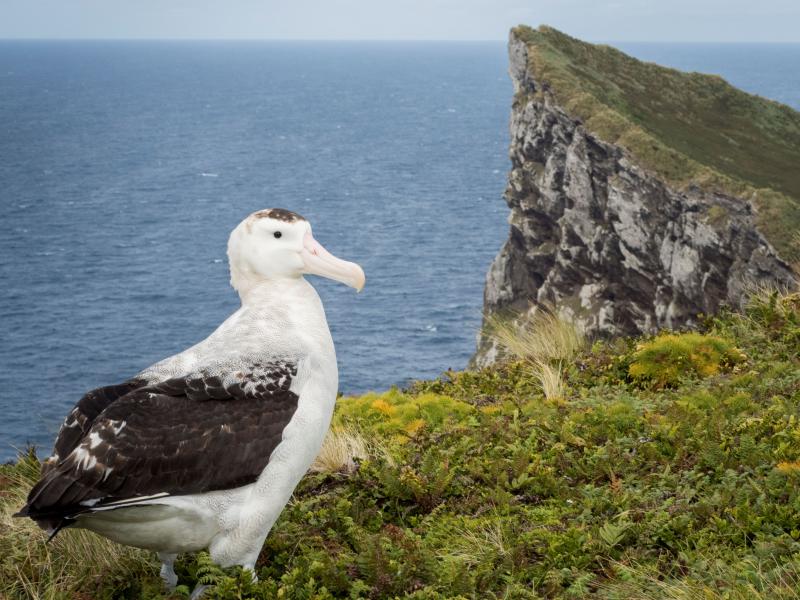
Operation Million Dollar Mouse
WWF-New Zealand is proud to have played a key role in the eradication of thousands of mice from Antipodes Island in 2016 - AKA ‘Operation Million Dollar Mouse’.
Image

A win for our seabirds
After years of advocating for better protection of our seabirds, in 2024 we secured a major victory with the introduction of stronger rules to prevent our seabirds being caught in longline fishing lines as accidental ‘bycatch’.